Stafford County is facing a familiar problem. Residents want relief from rising property tax bills. The county needs revenue for schools, public safety, transportation and other services. Businesses want Stafford to remain competitive with neighboring jurisdictions.
County leaders are now considering another source of revenue: the Business, Professional and Occupational License tax, commonly known as BPOL.
The proposal has generated significant opposition from businesses and residents, while supporters argue that businesses should contribute more toward county services. The Board of Supervisors has scheduled a public hearing for September 15.
BPOL is not a tax on business profits. It is generally measured against gross receipts. A company may owe the tax even when its expenses exceed its revenue.
What exactly is BPOL?
Virginia allows local governments to impose BPOL taxes on businesses operating within their jurisdictions. State law sets maximum rates by business classification:
- Contractors: $0.16 per $100 of gross receipts
- Retailers: $0.20 per $100
- Repair, personal, business and other services: $0.36 per $100
- Financial, real estate and professional services: $0.58 per $100
For a locality Stafford’s size, state law generally establishes a $100,000 gross receipts threshold below which a license tax may not be imposed. Stafford could adopt a larger exemption. The rates above are state maximums, not rates Stafford has adopted.
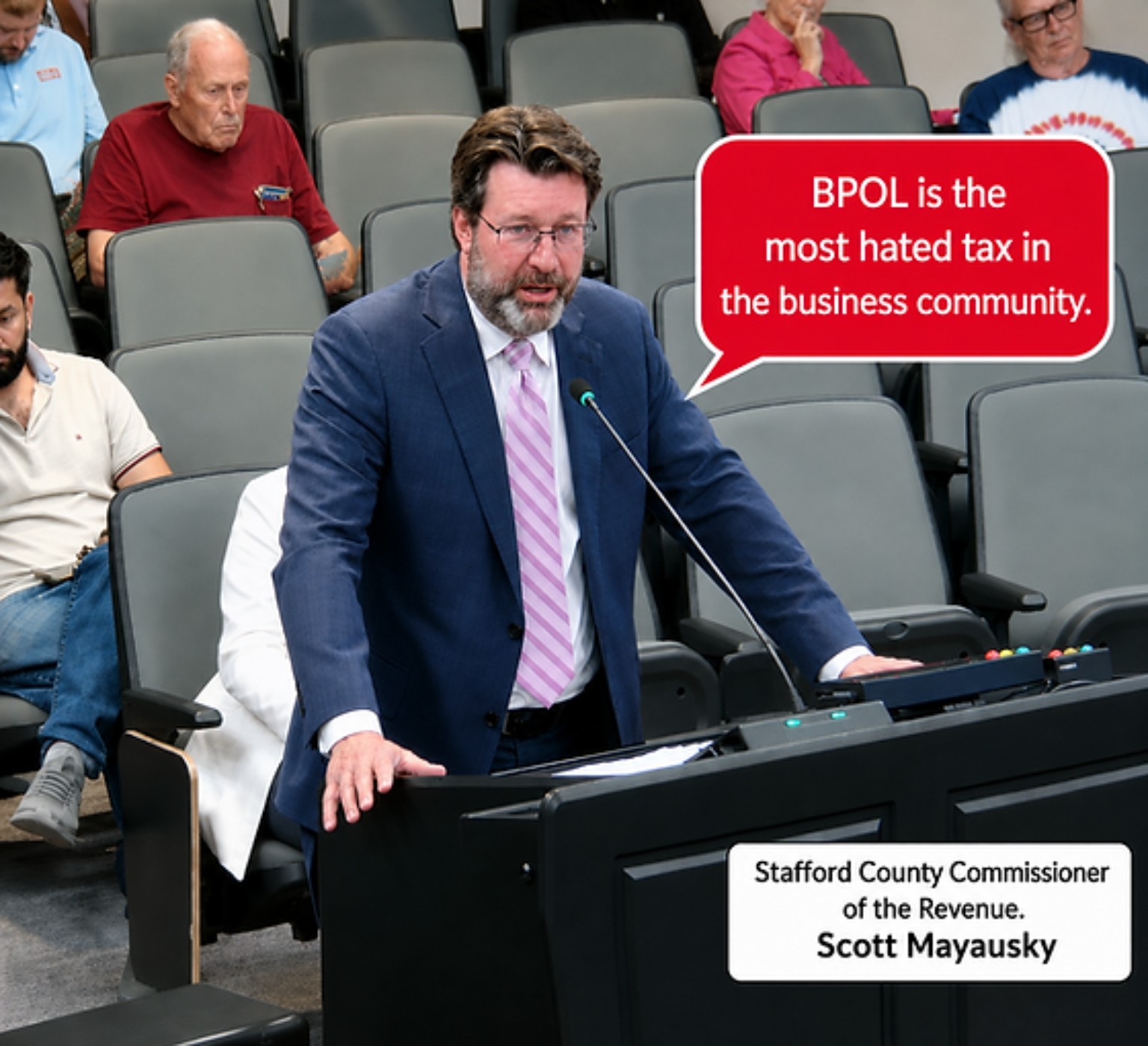
If a business receives $1 million from customers, BPOL can be calculated using that revenue even though the business also paid for payroll, materials, rent, insurance, equipment and other expenses. Commissioner of the Revenue Scott Mayausky summarized the issue during the county’s discussions:
“So even if your business is operating in the red, you are filing on the gross receipts.”
That structure is especially important for businesses with high sales but narrow profit margins. A tax rate that looks small against revenue can consume a much larger portion of actual profit.
How much money would Stafford actually get?
Stafford does not currently impose BPOL. It instead uses a merchants’ capital tax, which applies to business inventory and generates approximately $1 million annually, according to Mayausky. Virginia law generally prevents a locality from imposing both merchants’ capital and BPOL taxes on the same businesses, so the proposal involves replacing one revenue source with another.
Mayausky estimated that a system modeled after Spotsylvania County could generate approximately $3.5 million to $4 million per year. Officials have also said first year collections could be closer to $2 million.
Collection is not free. Estimated annual administration costs are approximately $300,000 to $350,000, including two additional employees, equipment and software.
The gross BPOL estimate is not the same as new spendable revenue. Stafford would have to account for administration and roughly $1 million in merchants’ capital revenue that BPOL would replace.
Would BPOL lower property taxes?
This may be the most important question for homeowners. Board Chairman Deuntay Diggs has argued that Stafford needs to distribute the cost of government more broadly instead of relying so heavily on residential real estate taxes. During the June discussion, he said he was “all in” on BPOL and described the purpose as being fair across the board.
Opponents question whether the amount involved could produce meaningful homeowner relief. Rock Hill District Supervisor Crystal Vanuch said that approximately $2 million in projected first year revenue was “not even a penny” on the real estate tax rate and concluded that it would not lower real estate taxes.
If Stafford collects millions from businesses, exactly how much will the average homeowner’s tax bill decrease?
The public discussion reviewed by Save Stafford does not establish an automatic dollar for dollar reduction in real estate taxes. Without a binding mechanism, BPOL could diversify revenue without reducing the total amount of local taxation. Those are not the same result.
The Board is divided
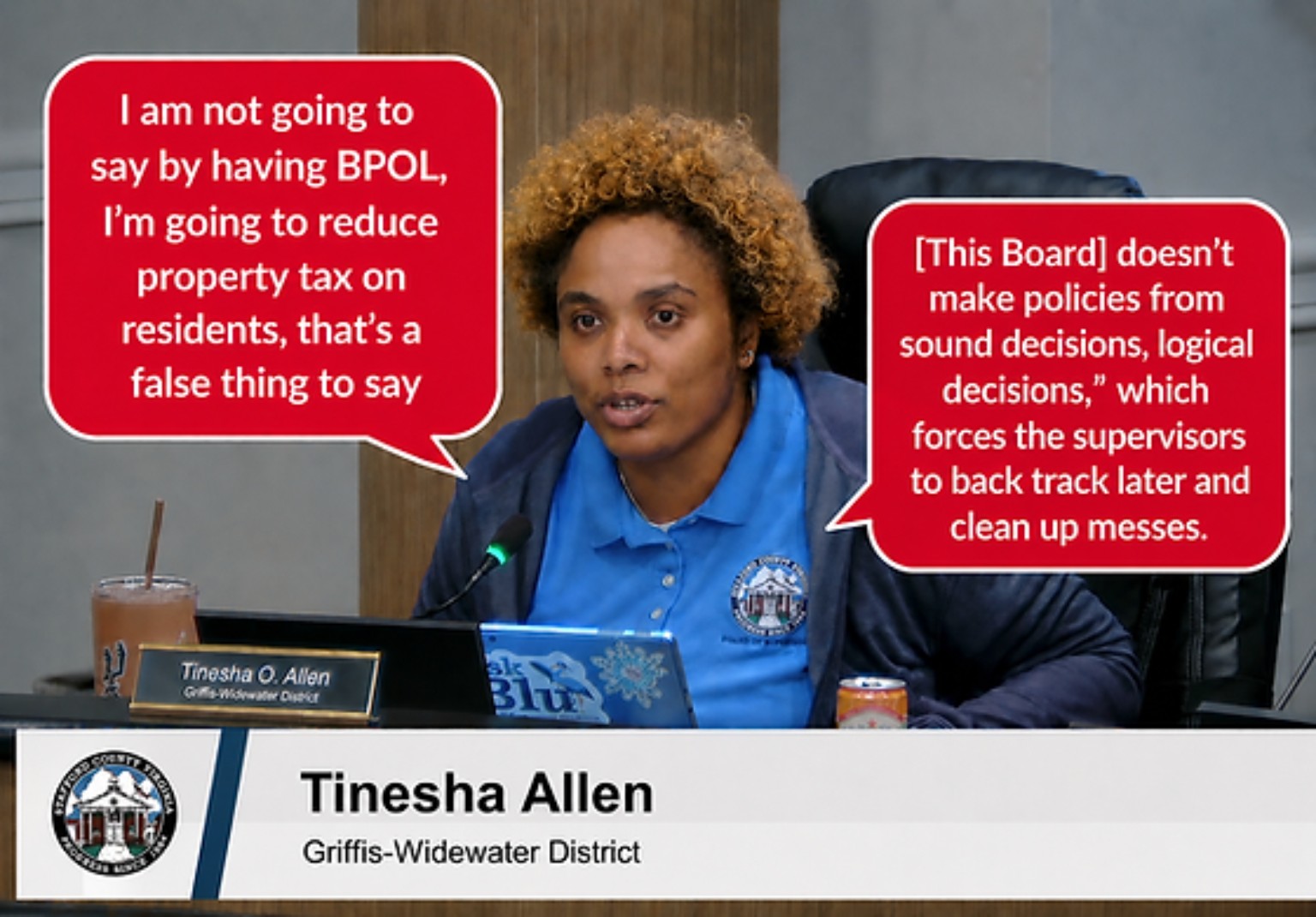
The Board voted 4 to 2 in August to advertise the September 15 hearing. Supervisors Crystal Vanuch and Tinesha Allen voted against moving forward at that stage, arguing that more information was needed. Supervisor Darrell English was absent and later publicly stated his opposition, with particular concern for small businesses.
Supervisor Maya Guy voted to hold the hearing but cautioned that the procedural vote was not an endorsement of BPOL. Supervisor Pamela Yeung has been identified in reporting as a supporter of considering the tax. Diggs acknowledged the political difficulty: businesses do not want another tax, while homeowners do not want higher property taxes.
Who really pays a business tax?
Businesses write the BPOL check, but that does not mean they absorb every dollar of the economic cost. A business may accept lower profit, raise prices, reduce expenses, delay investment, change hiring decisions or invest elsewhere.
No one can predict with certainty how much of the cost would be passed to Stafford consumers, employees or property owners. The advocacy group No BPOL Stafford argues that the tax would increase prices and business costs, reduce hiring and investment and make Stafford less competitive. Those are campaign arguments, not guaranteed outcomes.
Is having no BPOL a competitive advantage?
Commercial real estate broker Wilson Greenlaw told supervisors that he markets Stafford’s lack of BPOL when companies decide where to locate. He said businesses have rejected Fredericksburg because of the tax and described Stafford’s position as a genuine competitive advantage.
That raises a larger economic development question. Stafford has spent years trying to attract more commercial development so homeowners do not carry as much of the county’s tax burden. If the absence of BPOL helps attract and retain companies, then not collecting it may have economic value. That value is difficult to quantify.
Supporters can reasonably respond that businesses benefit from Stafford’s roads, public safety, schools, workforce and public investments and should help fund those services. The stronger policy question is whether BPOL’s additional net revenue outweighs its cost and any effect on business attraction and retention.
Paul Milde has been here before
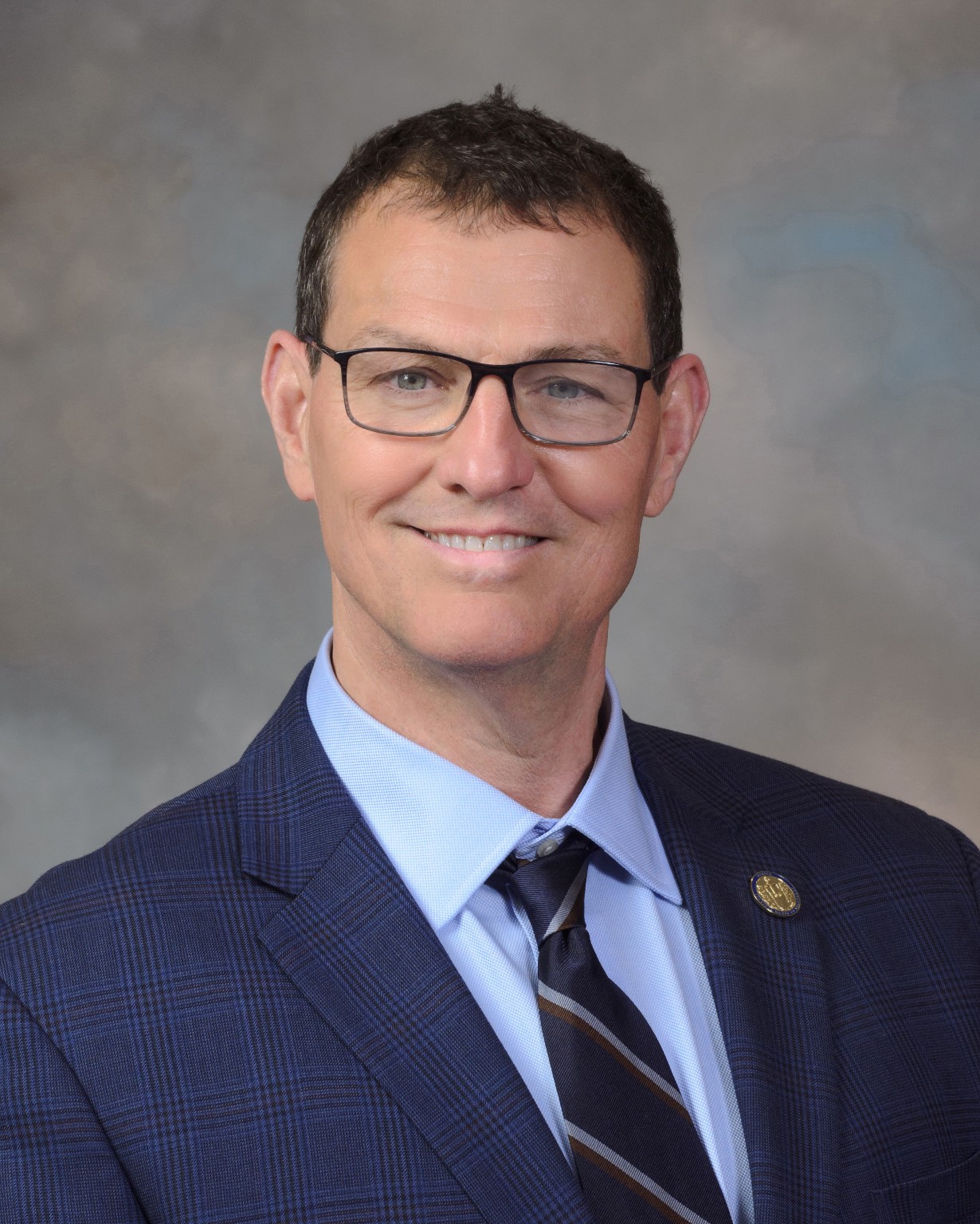
Paul Milde is one of the most visible opponents of the current proposal. He served three terms on the Stafford Board, including as chairman, and later represented Virginia’s 64th House District.
His involvement also has historical context. In a 2019 interview, Milde listed BPOL among the taxes he said he had worked to eliminate while serving on the Board. Stafford is therefore not debating the tax for the first time. It is considering whether to restore a tax the county previously repealed.
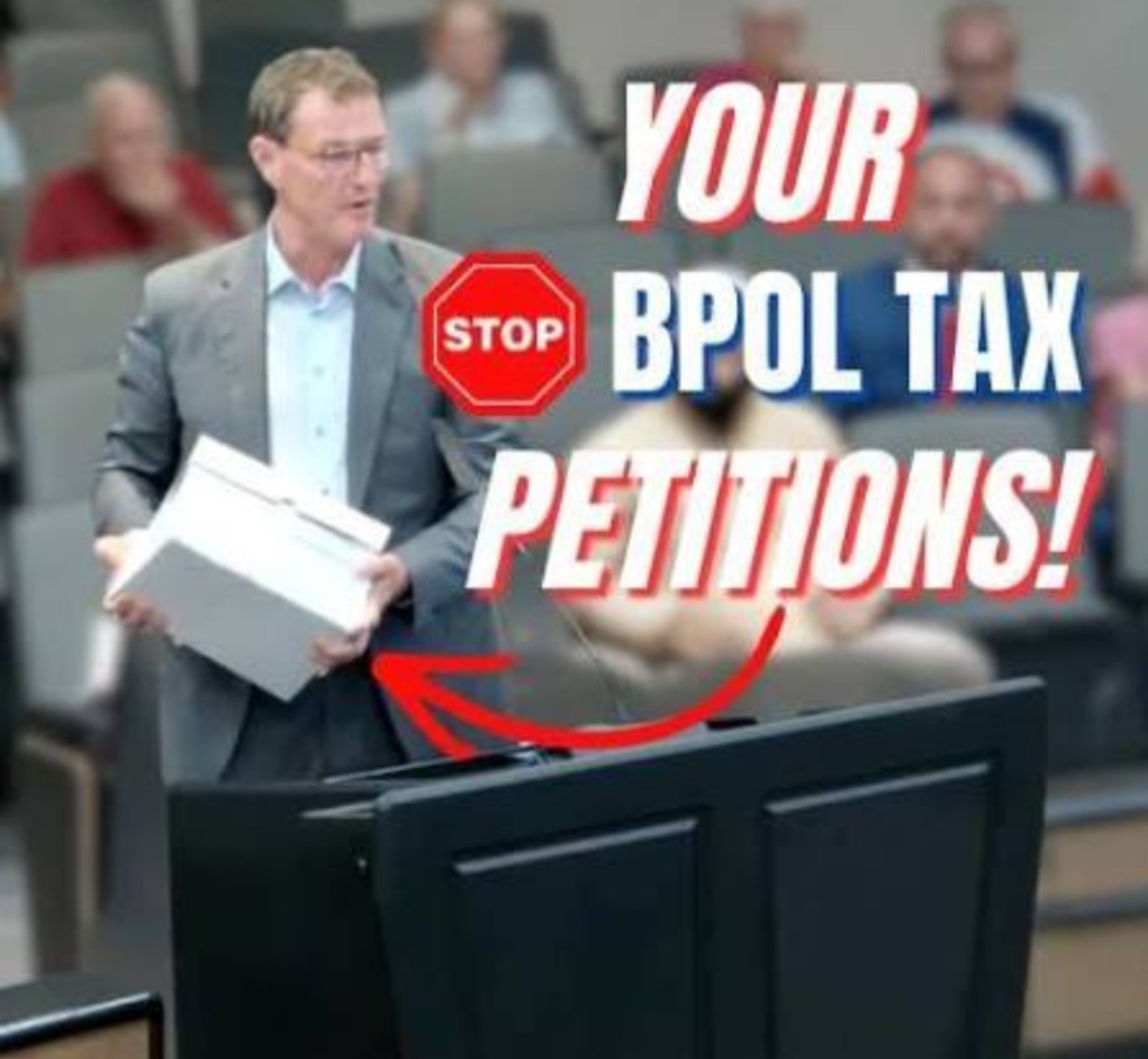
Milde has organized opposition through petition drives, a website, mailers and text messages. At the August meeting, he presented boxes containing 1,550 petition signatures. By early September, he said the petition had passed 2,000 signatures. The signature totals and campaign claims come from opponents and should be evaluated alongside county records.
Stafford should examine the whole tax picture
BPOL would not exist in isolation. Residents and businesses already pay property taxes, a meals tax and other local charges. A useful comparison must examine Stafford’s entire tax structure, including tax rates, exemptions, fees, property costs and the public services businesses receive. Comparing only one BPOL rate can create a misleading picture in either direction.
A $4 million question
There are reasonable arguments on both sides. Supporters can argue that Stafford needs more diversified revenue, businesses use county services and homeowners should not carry so much of the burden. Opponents can argue that gross receipts taxes are difficult for low margin businesses, create administrative expense and may surrender a competitive advantage.
Before September 15, county leaders should clearly show the proposed rates and exemptions, expected collections, administrative costs, merchants’ capital revenue being replaced and the amount that would remain as genuinely new revenue.
Then comes the number most residents need: How much would the proposal reduce the average homeowner’s tax bill?
If the answer is substantial, supporters have a powerful argument. If it is negligible, residents should understand that too. The BPOL debate is ultimately about Stafford’s strategy for paying for growth, attracting investment and deciding who pays for the government services the community expects.
Public hearing: Stafford County’s Board of Supervisors is scheduled to receive public comment on September 15. The official county agenda controls the date, time and details if the schedule changes.
Save Stafford’s position: BPOL risks weakening one of Stafford’s competitive advantages by discouraging new businesses from locating here. If commercial growth slows, homeowners could remain dependent on, or face greater pressure from, real estate taxes. Rather than providing meaningful tax relief, BPOL may ultimately work against the goal it is supposed to achieve.
Sources, documents & image credits
Read the original record
Stafford County Board of Supervisors — August 18 BPOL work session and hearing authorizationAugust 18, 2026 · Open original source ↗Fredericksburg Free Press — supervisors schedule BPOL hearingAugust 19, 2026 · Open original source ↗Fredericksburg Free Press — business leaders oppose BPOLSeptember 4, 2026 · Open original source ↗Fredericksburg Free Press — supervisors explore business license levyJune 24, 2026 · Open original source ↗Code of Virginia § 58.1-3706 — maximum BPOL ratesCurrent law reviewed September 5, 2026 · Open original source ↗Virginia Administrative Code — BPOL rates and thresholdsCurrent regulation reviewed September 5, 2026 · Open original source ↗Potomac Local — 2019 interview with Paul MildeJune 10, 2019 · Open original source ↗No BPOL Stafford — opposition campaignAdvocacy source reviewed September 5, 2026 · Open original source ↗Compare the financial stage, linked public documents and outstanding verification gaps.
View financial record →Support Save Stafford
Independent local information. No paywalls. No advertising.Research like this takes time and sometimes requires obtaining public records. Community support helps Save Stafford continue making this information freely available.
No subscription required. Contribute only if you choose. Financial contributions do not purchase editorial influence.